

Boat Rental vs Yacht Charter: Which Should You Book?
Mariam Revuelta
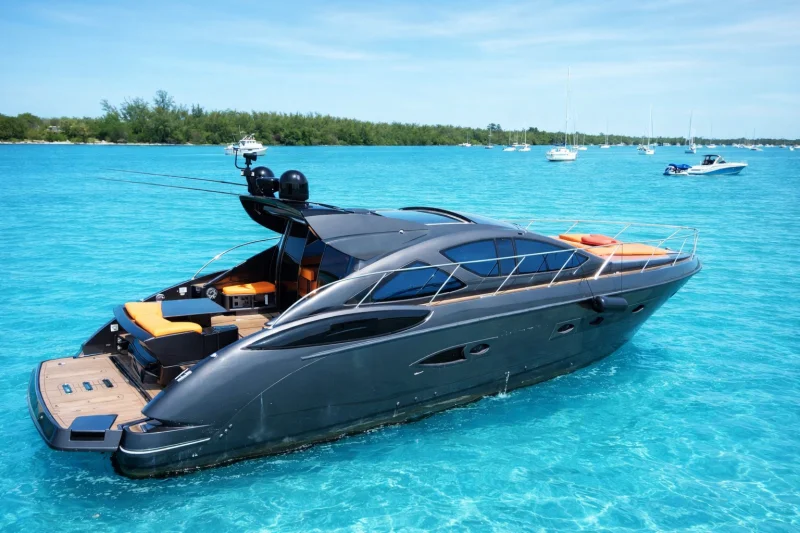
A rental hands you a boat. A charter hands you a boat and the people who run it. That one difference changes the license you need, the price you pay, and how much of the day you spend relaxing. Here's the cost and comfort math, so you can pick the right one before you start browsing.
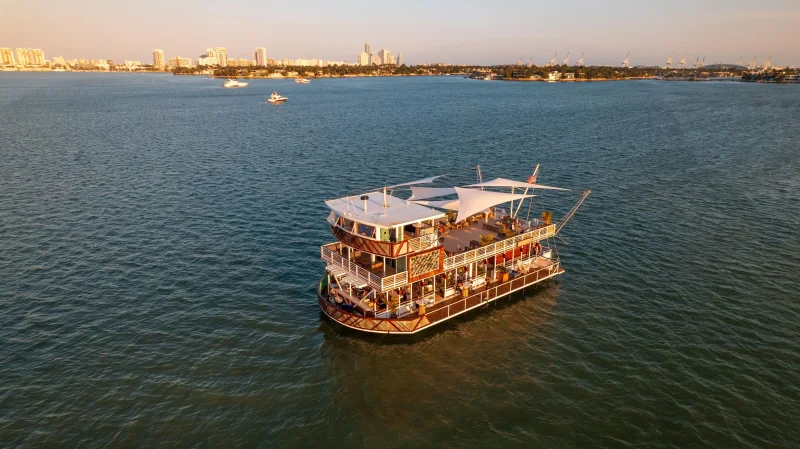
Key Takeaways
A charter includes a licensed captain and crew. A bareboat rental puts you at the helm.
No license needed for a charter. Self-drive needs a Florida boater education card.
Per person, a charter overtakes a rental somewhere around eight to ten guests.
Rentals top out near 12 guests. Charters scale to 49 and beyond on inspected vessels.
Rentals win a short fishing morning. Charters win almost every full day with a group.
The Short Answer
A boat rental gives you the vessel, and often you drive it. A yacht charter gives you the vessel plus a licensed captain and crew. Rentals suit small groups on short trips. Charters suit groups, long days, and anyone who'd rather not dock a boat.
Side by Side: The Full Comparison
Boat rental | Yacht charter | |
|---|---|---|
Crew | None, or captain added | Captain and crew included |
Typical length | 19 to 40 ft | 40 to 150 ft |
License needed | Boater education card | None |
Typical price | $150 to $280 / hr | $145 to $2,700+ / hr |
Guest count | 6 to 12 | 13, or 49+ on inspected vessels |
Trip length | Hourly to one day | Hourly to multi-day |
Fuel | You buy it | Included on a standard route |
Best for | Short trips, fishing, self-drive | Groups, full days, events |
One row deserves a second look. Guest count is where the two products separate hardest, because a rental can't simply take more people. Capacity is set by the vessel's license, so a group of fourteen has exactly one option.
Crew: The Difference That Changes Everything
This is the part people underrate. A captain does far more than steer, and the day is much better for it.
They plan the route around wind and tide, handle the departure and the docking, set the anchor at a sandbar so the boat holds position, run the safety briefing, watch fuel against your route, and monitor the radio. On larger boats a deckhand and stewardess handle the swim platform, the coolers, and the guests.
Docking alone is worth the money. It's the hardest few minutes of any day on the water, and on a charter you're on the bow watching it happen rather than doing it.
There's a quieter benefit too. A captain who works these waters daily knows where the sandbar sits at a given tide, which side of the bay is calm in an east wind, and which restaurant dock has space on a Sunday. That local knowledge isn't in any listing.
Do You Need a License?
No license is required for a yacht charter. Your captain holds the credential, and you're a guest for the day.
Self-drive is where the rule bites. Florida requires a boater education card for anyone born on or after 1 January 1988 who operates a vessel of 10 horsepower or more. Florida FWC publishes the current requirement. Other states set their own rules, so check locally if you're boating outside Florida.
Age rules apply separately. Florida requires children under six to wear a life jacket while underway on vessels under 26 feet, which covers a good share of the rental fleet. Captains carry child-size jackets aboard.
Cost: Where the Crossover Sits
A rental looks cheaper on the tile and often isn't by the end of the day. Fuel, a captain if you add one, and a security deposit all land on top of the headline rate.
4-hour trip | Rental, 26 ft | Charter, 60 ft |
|---|---|---|
Base rate | $800 at $200 / hr | $1,000 at $250 / hr |
Captain | $160 to $240 if added | Included |
Fuel | $60 to $120 | Included |
Guests it suits | Up to 8 | Up to 13 |
Delivered total | $1,020 to $1,160 | $1,000 |
Per person at 4 guests | $255 to $290 | $250 |
Per person at 10 guests | Over capacity for comfort | $100 |
The crossover lands around eight to ten guests. Below that the two are close and a rental can win on a short trip. Above it the charter is cheaper per head and considerably more comfortable.
Risk belongs in the comparison too. On a self-drive rental you're the operator, so a scraped hull or a bent prop lands on your deposit. On a charter the operator carries hull and liability cover, and a licensed captain is at the wheel.
What Each Booking Includes
Compare what actually arrives, not just access to the boat. A rental centers on the vessel itself, with fuel, a captain, and any gear treated as separate decisions you make and pay for.
A charter bundles more by default. Captain, crew, standard-route fuel, dock fees at the home marina, coolers with ice, bottled water, and safety gear all sit inside the rate. Some boats add paddleboards or floats at no extra cost.
What's never automatic on either is catering, alcohol, powered water toys, gratuity, and tax. So a charter is more inclusive rather than all-inclusive. Compare the final quoted total on both, and the real gap shows up.
Comfort, Shade and Bathrooms
Count the hours you'll be in the sun before you decide. Rentals in the day-boat class often carry one head or none, a small bimini, and no galley. That's genuinely fine for three hours.
Charters bring shaded seating, a real bathroom, interior space, and somewhere to put food. Across a six or eight hour day with a group, those are the details that decide whether people want to do it again.
Group size decides how much this matters. Four people can share one head and a small patch of shade without noticing. Twelve people can't, and by hour five that's the only thing anyone talks about.
Trip Length: Hourly, Full-Day and Multi-Day Options
Duration steers the choice more than people expect. Rentals suit hourly, half-day, and single-day outings, and the structure stays simple throughout.
Charters cover the same ground and keep going. Full days run four to twelve hours, and overnight or multi-day trips open up once the boat has staterooms. A 60 ft carries one or two, a 90 ft carries four.
Longer trips also change the cost structure. Provisioning, crew service across meals, dockage at overnight stops, and fuel for real distance all enter the quote. At that point the booking looks nothing like a day rental, which is why the two get priced differently.
Minimums shape short trips as well. Nearly every listing carries a three or four hour minimum, so a one-hour outing isn't really on the menu. Plan for four hours as the floor and pick the product that suits that length.
Which One Fits Your Plan
Your day | Pick | Why |
|---|---|---|
Sandbar day, 6 to 10 guests | Charter | Captain sets the anchor and watches the swim |
Birthday, 8 to 13 | Charter | Shade, bathrooms and the best per-person cost |
Bachelorette, 10 to 12 | Charter | Long day, photos, and nobody has to drive |
Corporate event, 20 plus | Charter | Needs an inspected vessel and real crew |
Fishing morning, 2 to 4 | Rental | Short, cheap, and you want the helm |
Sunset cruise, 2 to 6 | Either | Charter for the romance, rental for the budget |
First time on the water | Charter | Someone else handles the hard parts |
See our dedicated pages for each occasion: birthday charters, bachelorette charters, corporate charters, the smallest boats in the fleet, speedboat rentals, and luxury yacht charter.
What a Marketplace Changes
A single operator quotes from the boats it owns, so the answer to rental or charter is whichever one it sells. A platform listing more than 1,000 boats across both categories can put them side by side for the same date and let the day decide. That's the honest version of this comparison, and it only works when both products are on the same shelf.
Frequently Asked Questions
What is the difference between a boat and a yacht?
Size, crew, and amenities rather than one length cutoff. Yacht generally means a larger vessel with cabins, a head, a galley, and crew aboard. Boat covers everything smaller and simpler. The forty-foot line people quote is a convention rather than a rule.
Is a charter cheaper than a rental?
Per person, yes, once you pass roughly eight to ten guests. A charter includes the captain and fuel, so the delivered total stops climbing while the headcount keeps rising. Below eight guests, a short self-drive rental often costs less overall.
Can I drive the boat myself on a charter?
Often, in open water and at the captain's discretion. Just ask when you board. Docking, the inlet, and anything in traffic stay with the captain, because the insurance behind the charter assumes a licensed operator is at the wheel for those moments.
Which one is better for a big group?
A charter, without much argument. Rentals top out around 12 guests and rarely have the shade or bathrooms a group needs. Charters scale to 13, then to 49 and beyond on inspected vessels. Our guide to matching boat size to guest count matches headcount to length.
What does yacht charter mean?
Booking the use of a yacht for a set period under a charter agreement. Recreational charters are usually crewed, with a captain included. Bareboat charters exist too, where you take the vessel without crew. So charter alone doesn't guarantee a captain or an all-inclusive price, which is why the agreement matters.
Do rentals include fuel?
Usually not. The common convention is that you return the boat with the tank as you found it, and a deposit hold covers any shortfall. Budget roughly $60 to $120 across a three to four hour trip. Crewed charters include fuel for a standard route. BoatUS Foundation has good general reading on how liability and responsibility shift between the two models.
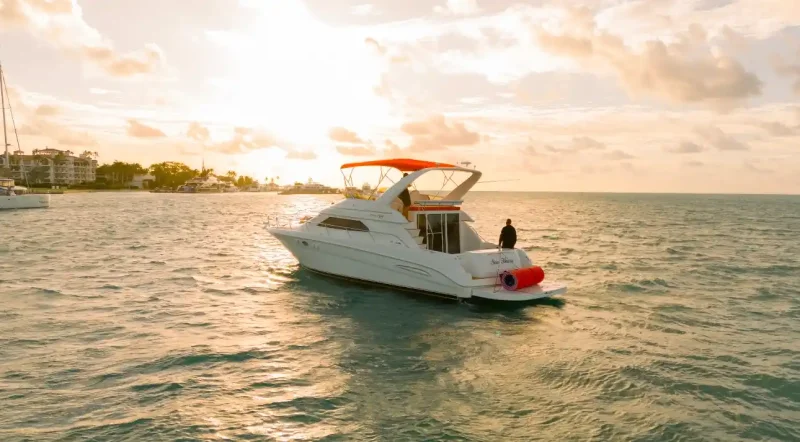
Compare Both on One Search
The easiest way to settle this is to price both for your actual date and group. Filter by boat type and guest count on our search page, so you can see the real difference rather than guess at it. Still unsure which fits? Contact our team and we'll help you decide.