

Yacht Water Toys: Seabob, Jet Ski, Flyboard and More
Mariam Revuelta
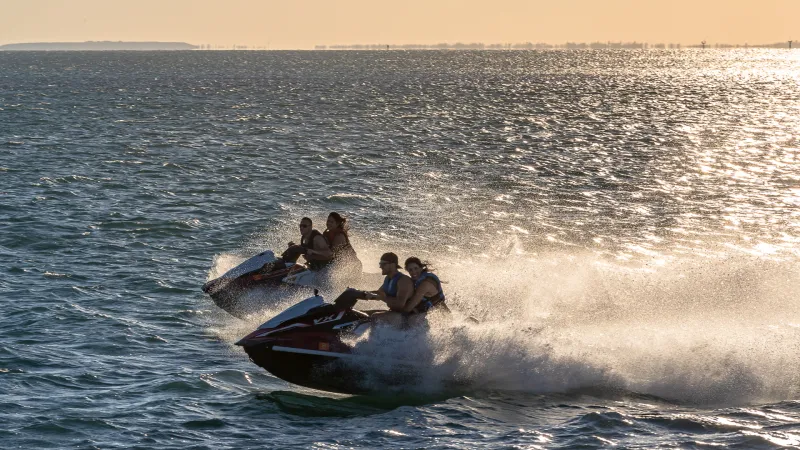
Water toys are what turn a nice cruise into a day people talk about afterward. Seabobs, jet skis, flyboards, inflatables, and floating mats all add roughly $50 to $200 an hour each. Some come free with the boat. Here's what every toy actually does, who can use it, and which ones need a crew member watching.
Key Takeaways
Add-ons run about $50 to $200 an hour per item, and some boats include the passive ones.
Seabobs suit beginners and need a five-minute briefing. Ages 14 and up with a parent.
Jet skis are 18 and over with valid ID.
Flyboards are instructor-led only, and most of a first session goes on learning.
Inflatables and mats get used the longest, and they need a protected stop rather than a cruise.
Every Toy Compared
Toy | Skill | Ages | Supervision | Cost |
|---|---|---|---|---|
Seabob | Beginner | 14+ with a parent | 5-minute captain briefing | $50 to $200 / hr |
Jet ski | Intermediate | 18+ with valid ID | Captain briefing required | $50 to $200 / hr |
Flyboard | Advanced | By operator | Instructor-led only | $50 to $200 / hr |
Wake jet board | Intermediate | By operator | Captain briefing | $50 to $200 / hr |
Towable tube | Beginner | All ages | Life jackets required | $50 to $200 / hr |
Kayak or paddleboard | Beginner | All ages | Optional guidance | $50 to $200 / hr |
Inflatable slide | Beginner | All ages with jackets | Captain approval | $50 to $200 / hr |
Floating mat | Beginner | All ages | Captain sets it up | $50 to $200 / hr |
Snorkel gear | Beginner | All ages | Captain briefing | $50 to $200 / hr |
What is a Seabob?
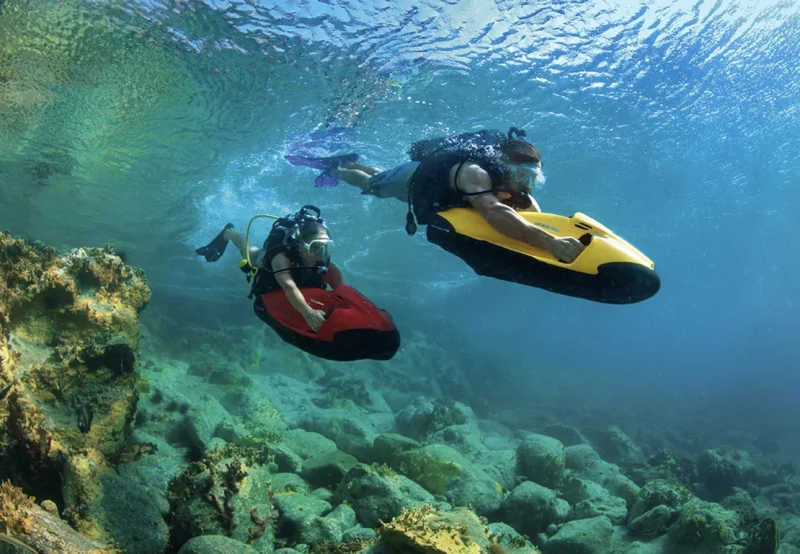
A Seabob is a handheld underwater scooter, built by the German manufacturer Cayago. You hold onto it, it pulls you along, and you steer by tilting it up or down. On the surface it skims. Point it down and it takes you under.
It's the easiest of the powered toys to pick up, which is why it's the most requested. Guests who have never used one are usually confident within ten minutes. Ages 14 and up with a parent present, and a five-minute briefing with the captain before you get in.
How to Handle a Seabob
Two hands on the grips, arms slightly bent, body flat behind it. Tilt the nose down to descend and up to surface. That's genuinely the whole technique.
Depth control is the part people get wrong at first, usually by pulling up too hard and porpoising along the surface. Relax the arms and it settles. Battery runtime is the real limit rather than skill, and you'll get tired before it does.
What It Costs to Add
Budget within the $50 to $200 an hour band, depending on the model and the vessel. Some boats include one in the rate and others charge for it, which is a real difference between two otherwise similar listings.
Ask about battery swaps as well as price. A single battery caps how much genuine use a group gets, and with six people wanting a turn that matters more than the hourly figure.
Jet Skis on a Charter
Two arrangements exist. Some boats carry a jet ski on the swim platform or in a garage. Others have one delivered to meet you at the sandbar.
Riders must be 18 or over with valid ID, and a captain briefing comes first. Life jackets are required. If you want two skis so people aren't queueing, say so when you book, because carrying capacity is limited on most vessels.
Flyboard and E-Foil: The Steep Learning Curve
Flyboards are the spectacular one, and they're also the hardest. You strap into a board fed by a jet of water and try to hover. Sessions are instructor-led only, for good reason.
Be realistic about the first attempt. A good chunk of a first session goes on falling, and most people get properly airborne near the end rather than the start. E-foils demand balance and patience in a similar way. Both are worth it if the group finds that funny rather than frustrating.
Wakeboards, Waterskis and Towable Toys
Towed gear needs a boat set up for it, meaning enough power and a proper tow point. Not every yacht qualifies, so check before planning a wakeboarding afternoon.
Wakeboarding and waterskiing both take a few attempts to get up, and a wake jet board sits between the two in difficulty. Towable tubes are the opposite: no skill at all, all ages, life jackets on, and they usually produce the loudest hour of the day.
A dedicated wake boat is the better call if towed sports are the whole point of the trip rather than one activity among several.
Inflatables, Mats and Floating Cabanas
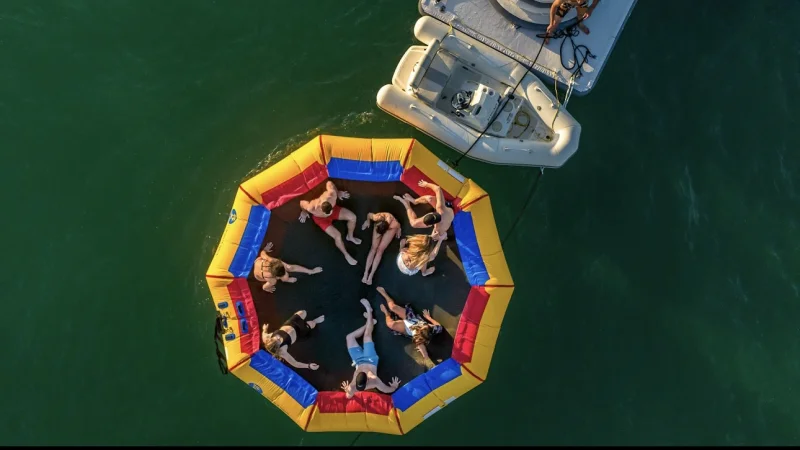
The low-effort category, and honestly the one that gets used longest. Floating mats, lily pads, inflatable slides off the top deck, and shaded cabanas on the water.
Nobody needs a briefing, all ages work with life jackets, and people stay on them for hours. The catch is that they only function at a protected anchored stop. You can't deploy a slide under way, so they belong to the sandbar part of your day.
Which Toys Need Crew Supervision
This changes the price, so it's worth knowing before you compare quotes.
Needing a crew member on the platform or in the water: flyboards, always instructor-led. Jet skis, with a briefing and someone watching. Seabobs, briefed and monitored. Towed sports, since somebody has to drive and somebody has to spot.
Self-service once set up: floating mats, lily pads, kayaks, paddleboards, and snorkel gear. If a toy occupies a crew member for the session, that person isn't doing anything else, which is why supervised toys sometimes carry a higher effective cost.
Which Water Toys Are Best for Your Group?
Match the gear to who's actually aboard.
Families with kids. Towable tubes, floating mats and snorkel gear. All ages, no learning curve, life jackets on.
Bachelorette and birthday groups. Floating mats and a paddleboard for photos, plus a seabob if the group is active.
Corporate groups. Keep it simple. Mats and paddleboards let people opt in without anyone feeling put on the spot.
Couples. A seabob each is the best money on this list, and snorkel gear if the water is clear.
Thrill seekers. Flyboard and jet ski, and book a longer stop so the learning time doesn't eat the whole afternoon.
One rule for mixed groups: pick at least one thing that needs no skill. A day where half the group is queueing for the only powered toy is worse than a day with two mats and a tube.
Safety and Etiquette
None of this is complicated and all of it keeps the day easy.
Life jackets are required for towed toys and for children, and captains carry child-size PFDs aboard — Florida's life jacket rules spell out exactly who needs one and when. Wait for the captain to call the swim before anyone gets in, and use the ladder rather than the transom.
Keep powered toys well clear of swimmers, anchor lines, and other boats. Nothing runs while the vessel is under way — Florida's boating regulations cover personal watercraft rules specifically. At a busy sandbar where boats sit close together, keep the throttle down near other groups and give people room.
Where to Use Them
Toys need a protected, anchored stop rather than open water on a cruise. The sandbars are the obvious answer, with the tide window deciding when the depth works.
Haulover is busier and Nixon off Key Biscayne is calmer, which matters if you're putting beginners on powered gear. Our Haulover Sandbar guide and guide to Nixon Sandbar cover the timing for both.
Are Water Toys Included in a Charter?
Sometimes, and the split is predictable. Passive gear like paddleboards, floats, and snorkel sets is often included in the rate. Powered gear like seabobs, jet skis, and flyboards is almost always an add-on.
Because of that, two listings at the same hourly rate can differ by hundreds once you add equipment. Check the inclusions before you compare prices. Our full breakdown of what's included in a charter covers every line, and the fleet's water toy listings show which boats carry what.
Frequently Asked Questions
How much does a Seabob cost to rent?
Add-on equipment runs roughly $50 to $200 an hour depending on the model and vessel, and some boats include one in the rate. Ask about battery swaps as well as price, since a single battery limits how much use a group of six actually gets from it.
Do you need training for a flyboard?
Yes. Flyboard sessions are instructor-led only, and that's not optional. Expect a good part of a first session to go on getting up and staying up. Most people manage sustained hovering toward the end rather than the beginning.
Can kids use water toys?
Many of them, yes. Towable tubes, floating mats, snorkel gear, and paddleboards work for all ages with life jackets on. Seabobs are 14 and up with a parent present, and jet skis are 18 and over with valid ID. Captains carry child-size life jackets aboard.
Are water toys included in the charter price?
Passive gear such as paddleboards, floats, and snorkel sets is often included. Powered gear such as Seabobs, jet skis, and flyboards is usually an add-on at $50 to $200 an hour. Check inclusions before comparing two boats, since it can swing the total by hundreds.
What happens if a toy gets damaged?
Guest-caused damage is covered by the damage deposit terms on your listing, which vary by operator. Normal wear is not your problem. Follow the captain's briefing, keep powered gear clear of hulls and anchor lines, and this rarely comes up at all.
Add Toys to Your Charter
A mat and a couple of paddleboards change a sandbar stop completely, and a Seabob will keep somebody entertained for the whole afternoon. Browse boats that carry gear on our water toys page, or start with search and filter by what's included. Questions about a specific setup? Contact us when you request a quote.