What Is a Llaut? Mallorca Traditional Boat Explained
Mariam Revuelta
A llaüt is the iconic traditional Balearic boat, easily recognized by its pointed double-ended hull, broad wooden beam, and graceful Mediterranean profile. Originally crafted by local shipwrights known as mestres d'aixa for coastal fishing, this historic vessel has evolved into one of the most comfortable and stable platforms for a leisurely group day on the water. For travelers organizing an outing with friends or family, chartering a llaüt provides an unhurried, grounded connection to coastal seafaring traditions.
Modern day charters on a llaut boat mallorca focus on relaxed cruising, scenic swimming stops, and spacious outdoor deck living. Because these vessels sit deep and stable in the water, they roll far less at anchor than many lightweight modern crafts. Whether your group plans a peaceful swim in a sheltered cove or a relaxed afternoon meal onboard, understanding the distinct qualities of the llaüt will help you choose the right vessel for your private charter.
| Cruising Region | Coastal Character | Ideal Group Experience | Anchoring and Navigation Note |
|---|---|---|---|
| Southwest (Andratx to Santa Ponça) | Steep limestone headlands and sheltered coves | Afternoon swims, socializing on deck, easy port access | High boat traffic in peak summer; always drop anchor in pure sand to preserve seabed life. |
| Northwest (Serra de Tramuntana) | Dramatic cliffs, dramatic drop-offs, clear deep water | Scenic coastal cruising beneath mountain slopes | Exposed to northern swells; departure depends entirely on daily wind and sea state. |
| East Coast (Portocolom to Cala d'Or) | Narrow, fjord-like inlets and sheltered calas | Relaxed swimming, family days, gentle coastal hops | Sheltered anchorages; strict adherence to designated mooring buoys where posidonia thrives. |
| North (Badia de Pollença & Alcúdia) | Wide bays with mountain backdrops and calm shallows | Multi-generational family groups, open views | Shallow coastal shelves; skippers carefully track water depth and afternoon sea breezes. |
The Origins and History of the Traditional Balearic Boat
The origins of the llaüt date back several centuries in the Western Mediterranean. Early maritime historians trace its roots to Roman and North African coastal utility crafts, which gradually adapted to the specific winds, currents, and reefs of the Balearic archipelago. In Mallorca and neighboring islands such as Menorca and Ibiza, local carpenters perfected a double-ended design, meaning both the bow and stern terminate in a pointed, functional shape.
Historically, the llaüt served as the backbone of the island's coastal economy. Artisanal fishermen relied on its seaworthiness to haul nets and longlines in changeable weather. Originally propelled by oars and a triangular lateen sail hoisted on a single raked mast, the vessel was built for endurance rather than speed. The hull was shaped from resilient local hardwoods, such as pine, oak, and olive, designed to withstand heavy use and choppy coastal waters without compromising buoyancy.
As internal combustion engines became common during the twentieth century, fishermen integrated small, dependable inboard diesel engines. This mechanical transition altered the boat's practical range while retaining its iconic hull lines and forward-extending timber spar, known as the espolón. Over recent decades, as artisanal fishing scaled down, many of these classic vessels were lovingly converted into leisure yachts. Today, whether navigating an antique restored wooden model or a modern fiberglass interpretation, stepping onto a traditional Balearic boat connects you directly with Mallorca's deep maritime past.
Anatomy and Design: Why the Llaüt Rides the Sea Differently
The unique build of a llaüt makes it immediately distinguishable from modern production cruisers. Every structural feature reflects generations of trial and adaptation to Mediterranean sea conditions.
The Double-Ended Displacement Hull
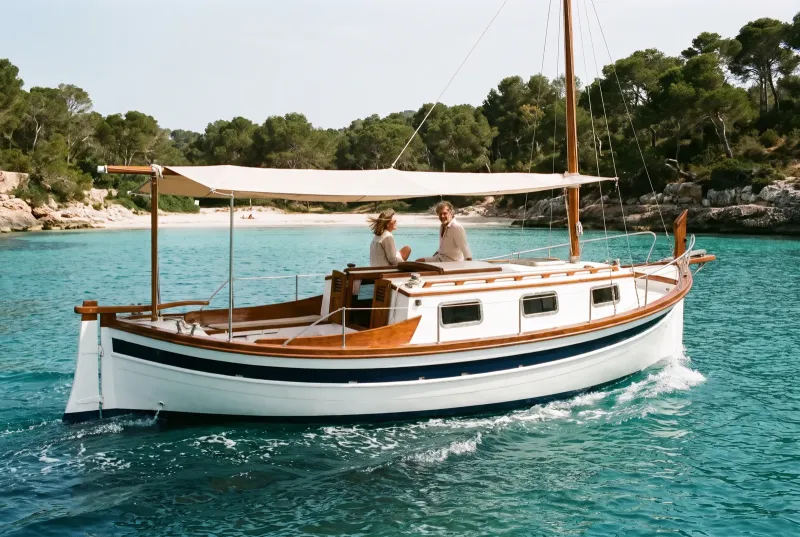
Unlike contemporary planing motor cruisers that ride on top of the water at high speeds, a llaüt features a full-displacement hull. It sits firmly down in the water. The pointed bow cuts smoothly through incoming chop, while the matching pointed stern parts following seas cleanly. This balance prevents the vessel from being thrown off course by stern waves, offering a smooth, predictable motion that reduces seasickness for passengers.
A Wide Beam and Spacious Deck Layout
For its overall length, a llaüt features a remarkably wide beam. This generous width creates an open, single-level deck platform that is well-suited for groups. While modern performance boats often sacrifice deck space for aerodynamic lines, a llaüt maximizes outdoor usable area. Wide gunwales, flush teak or wooden decks, and stable central tables allow guests to move around securely without stepping over complex rigging or tight companionways.
The Practical Espolón and Shaded Toldos
At the bow, traditional llaüts feature an elongated wooden timber post that extends past the stem head. Originally used to secure fishing gear and handle sails, it remains a defining aesthetic and functional marker. Over the main cockpit, llaüts almost universally feature substantial canvas awnings, locally called toldos. These provide expansive shade during peak afternoon sun, creating a comfortable outdoor dining and lounge space protected from intense UV rays.
Llaüt Rental vs. Modern Motor Yachts and Catamarans
Choosing the right vessel depends on how your group prefers to spend time offshore. While some travelers seek rapid speed, others prioritize atmosphere, stability, and peaceful leisure. Comparing a llaut rental mallorca with other boat styles helps set expectations for your day.
- Llaüts versus Motor Yachts: A high-performance motor yacht rental in Mallorca focuses on speed, cutting transit time across long distances along the coast. In contrast, a llaüt cruises at a steady, measured pace, typically between six and nine knots. The journey itself forms the primary experience. Low-revving inboard diesel engines emit a gentle, rhythmic hum rather than high-pitched engine roar, allowing clear conversation across the deck.
- Llaüts versus Modern Sailboats: While a sailboat rental in Mallorca delivers the grace of wind power, sailing requires constant awareness of lines, heel angles, and wind direction. A llaüt delivers a similar vintage aesthetic and connection to the water, but remains flat and steady, offering an effortless environment for non-boaters.
- Llaüts versus Catamarans: A large catamaran rental in Mallorca offers unmatched surface area for very large parties. However, catamarans have wide footprints that can make it harder to enter smaller, rocky inlets. A traditional llaüt offers comfortable space for typical group sizes while maintaining the agility to slip easily into intimate coves.
What to Expect on a Private Llaüt Boat Trip
Booking a private llaüt for a full or half-day outing delivers a distinctly relaxed rhythm. Unlike fast-paced boat transfers, a classic cruise encourages guests to slow down and embrace island life as it has existed for generations.
Because the boats listed on Book My Boat are operated by experienced licensed captains, your group does not need to worry about piloting, navigation channels, or anchoring protocols. After meeting your captain at the marina slip, you will run through a brief safety orientation before casting off lines. The captain assesses the day's wind and swell patterns to chart the smoothest, most enjoyable route possible along the nearby coastline.
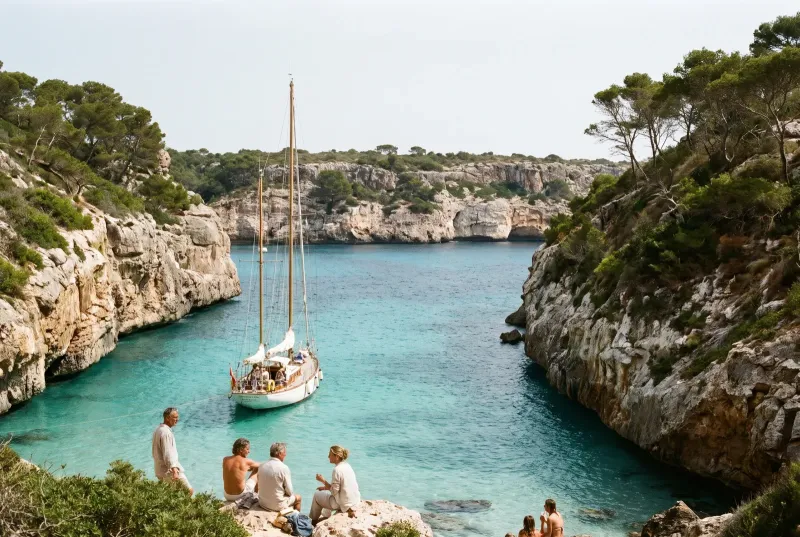
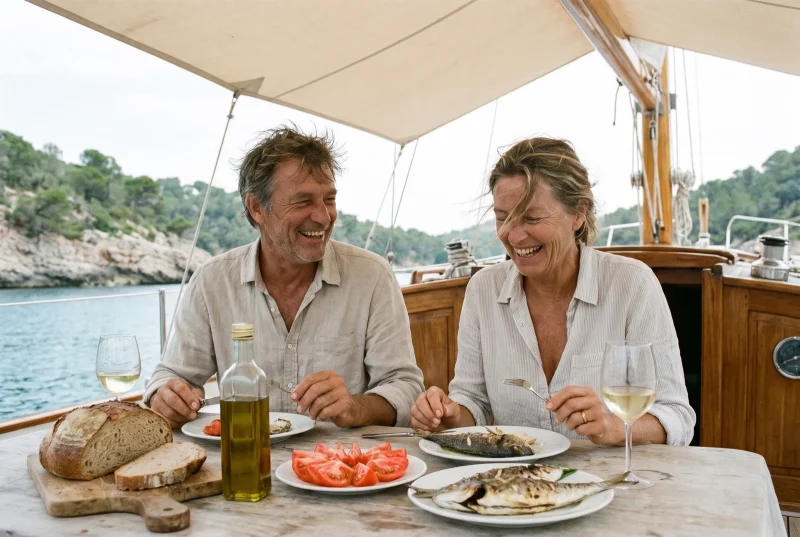
During a typical llaut boat trip, the captain will guide the vessel along coastal headlands toward calm anchorages. Once arrived in a protected cala, the engine is cut, the anchor is carefully set in sand, and the stern ladder is lowered into the water. The stable platform makes swimming, snorkeling, and boarding simple for swimmers of all confidence levels. Between swims, guests can dry off on forward sun pads or gather under the toldo around a table laid out with local bread, olives, cheeses, and cold drinks.
For travelers interested in evening departures, a sunset yacht cruise in Mallorca aboard a llaüt offers golden light, cooler air, and quiet anchorages as daytime day-trippers return to port.
Top Ports and Departure Points for a Llaüt Charter in Mallorca
Because llaüts travel at displacement cruising speeds, your departure marina plays an important role in determining the sights you will encounter. Each coastal region of Mallorca presents a unique maritime character.
Port de Sóller and the Dramatic Tramuntana
Departing from Port de Sóller on the northwest coast places you beneath the sheer limestone cliffs of the Serra de Tramuntana mountain range. A llaüt cruise here offers expansive views of untouched stone headlands, historic defense towers, and deep marine waters. Because this coast lacks frequent shallow anchorages, charters here center around dramatic coastal sightseeing and swimming stops near sheer sea caves when swell conditions remain calm.
Portocolom and the Southeast Calas
Portocolom remains one of the island's most authentic maritime harbors, complete with working boatyards and historic boathouses with painted wooden doors. Chartering a llaüt from Portocolom allows quick, gentle hops into calm, turquoise inlets such as Cala Sa Nau, Cala Mitjana, or Cala Murada. The shallow sandy beds and low-lying pines make this an ideal base for a relaxed family yacht rental in Mallorca.
Palma Bay and the Southwest Marinas
Departing from the central marinas of Palma, Portals Nous, or Santa Ponça offers convenient logistics combined with quick access to sweeping bays and coastal coves. Cruises heading west can reach protected anchorages around Portals Vells and Cala Fornells, where calm waters provide pleasant conditions for afternoon swimming and deck dining.
Port de Pollença and the Far North
The northern bay of Pollença offers sheltered cruising waters backdropped by the Formentor peninsula. The headland shields inner waters from strong southerly winds, making it a reliable staging ground for vintage llaüts cruising along quiet coastal stretches.
Balearic Marine Conservation: Protecting Posidonia Seagrass
Part of enjoying a day offshore on a llaüt is participating in the protection of Mallorca's fragile marine environment. The Balearic Islands are home to vast underwater meadows of Posidonia oceanica, an endemic seagrass recognized as a UNESCO World Heritage asset. Posidonia acts as the lungs of the Mediterranean, oxygenating the water, sequestering carbon, and giving the island's coastal coves their remarkable clarity and luminous turquoise color.
Dragging anchors and heavy ground tackle across posidonia beds can destroy century-old meadows in seconds. Regional regulations strictly prohibit anchoring in posidonia. Licensed captains navigating boats listed on Book My Boat take special care to drop anchors exclusively into open patches of white sand, or to secure the vessel to regulated eco-mooring buoys where available. As guests, respecting these marine preservation rules ensures that Mallorca's underwater habitats remain healthy for future generations.
Frequently Asked Questions
Do I need a boating license to charter a llaüt in Mallorca?
Most private llaüt charters booked through Book My Boat include a professional, licensed captain who manages all navigation, maneuvers, and safety onboard. This allows you and your guests to relax without needing any boating credentials or nautical experience.
How many passengers can comfortably fit on a llaüt?
Most leisure llaüts are certified to carry groups of up to nine to eleven passengers plus the professional crew, depending on the boat's registered capacity and length. Because of the broad beam, groups have plenty of space to spread out comfortably across shaded seats and open sun pads.
Can a llaüt cover long distances around the island in one day?
No. Llaüts are displacement vessels built for leisure and stability, typically cruising at six to nine knots. Rather than circumnavigating long stretches of coastline, a llaüt charter is designed to explore a localized cluster of bays, coves, and swimming spots near the chosen departure port.
What should our group bring for a day out on a traditional boat?
Pack light, practical items for a warm day on the water: soft-soled boat shoes or bare feet onboard, swimwear, towels, sun hats, polarized sunglasses, and reef-safe sunscreen. Most llaüts have cold storage or coolers for your refreshments, but check your booking details beforehand to coordinate your food and beverage plans.
Mariam Revuelta
Founder & Chief Executive Officer
Mariam Revuelta is the Founder and CEO of Book My Boat, a premier luxury yacht charter company in Miami. She leads the company's overall strategy, fleet curation, and operations, dedicated to delivering world-class service, innovation, and unforgettable experiences on the water.
Recommended