How to Rent a Yacht in Miami: A Step-by-Step Guide
Mariam Revuelta
Booking a yacht in Miami takes about twenty minutes once you know what the form is going to ask. Five things decide everything: your date, your guest count, how many hours you want, which marina you leave from, and any extras. Have those ready and the rest is genuinely fun. Here are the seven steps, plus the contract clauses worth two minutes of your attention.
Key Takeaways
Seven steps: set the date, pick a size, choose crewed, compare quotes, read the contract, pay the deposit, plan the day.
A deposit holds the boat, and the balance comes due closer to the trip.
No license needed on a crewed charter. The captain holds it.
Book four to six weeks ahead for weekends, longer for holidays and big groups.
Read the weather clause before anything else. It's the one that decides your refund.
1. Set Your Guest Count and Date First
Everything downstream depends on these two numbers, so lock them in before you browse. Guest count decides which boats you can legally book, since most crewed charters cap at 12 or 13 guests based on the captain's license and the boat's size. Go above that and you need an inspected passenger vessel, which is a different class of boat and a different price.
Fix the date early too. Availability moves price far more than any negotiation will, and the cheaper boats disappear from popular Saturdays first. A flexible date is the strongest bargaining chip you have.
Guest count also decides your price band, not just your boat. Twelve people can book a $180 listing or a $2,000 one and stay inside the limit. Fourteen people can't book either, because the cap is set by the boat's license, not its deck space.
2. Pick a Boat Size That Fits the Group
The rough rule is four feet of boat per guest for comfort, not capacity. Here's the short version.
Guests | Length | What you get | Hourly from |
|---|---|---|---|
2 to 6 | 37 to 45 ft | One head, bimini shade, swim platform | $145 |
6 to 10 | 50 to 60 ft | Flybridge, more shade, often a second head | $180 |
10 to 13 | 60 to 70 ft | Salon space, two heads, steadier ride | $250 |
13 to 49 | 75 ft plus | Full crew, staterooms, inspected vessel | $1,000 |
A boat at maximum capacity feels very different from the same boat with room to spare. If your group is right on a limit, size up. Our full size guide covers the comfort math properly, and you can browse the fleet to see what's available at each size.
Count shaded seats rather than square feet. A boat rated for 13 usually seats eight or nine in shade at once, and the rest are standing or on the bow in full sun. Four hours is fine like that. Eight hours is not.
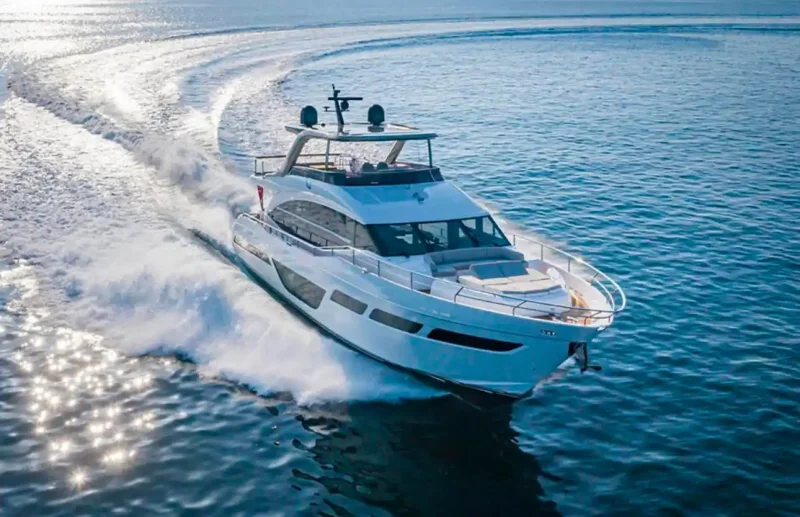
3. Choose Crewed or Bareboat
You're almost certainly booking crewed. Nearly every yacht listing includes a licensed captain, and the rate covers crew, fuel, and dock fees alongside the boat.
Bareboat means you drive, and it needs the right credentials from you. It exists mainly in the small-boat class and rarely above it, because insurance and Coast Guard rules both tighten with size. If the listing shows a captain, that's your answer.
Crewed is also the reason the day feels easy. Someone else reads the wind, picks the route, sets the anchor, and handles the dock. You get to sit on the bow and enjoy it, which is the entire point of booking a boat.
4. Compare Quotes the Right Way
Compare finished totals, never headline rates. Two boats at the same hourly number can land hundreds apart once the day is priced properly.
Ask about five things every time: the fuel policy for your route, whether gratuity is expected, dockage if you stop somewhere else, any cleaning fee, and tax at checkout. Here's what that looks like on two real listings at four hours.
Escape II, 60 ft | Casa Joyero, 60 ft | |
|---|---|---|
Hourly rate | $250 | $285 |
4-hour base | $1,000 | $1,140 |
Fuel, standard route | Included | Included |
Captain and crew | Included | Included |
Water toys | Check listing | Check listing |
What decides it | Lower base rate | Compare heads, shade and included gear |
Notice what the table doesn't settle. Both Escape II and Casa Joyero include the captain, crew, fuel, and dock fees, so the real difference is bathrooms, shade, and whether paddleboards come aboard free. Ask those three questions, and the cheaper boat isn't always the better booking.
5. Read These Five Contract Clauses
This is the part people skim, and it's the part that matters if anything changes. Two minutes here saves a bad week later.
Deposit and Payment Schedule
A deposit reserves the vessel, and the balance falls due closer to the charter date. Book Now, Pay Later is available on many listings. Keep two things separate in your head: the booking deposit that goes toward the trip, and any refundable security or damage deposit, which is a completely different thing.
Cancellation Terms
Find the cancellation deadline and check how the refund or credit changes as the date gets closer. Terms are set per listing rather than across the whole platform, so read the policy on your specific boat instead of assuming one window applies everywhere.
Weather and Captain's Discretion
There's a real difference between you canceling because the forecast looks grey and the captain calling off a trip because conditions are unsafe. Light rain doesn't cancel a trip. Storms, high winds, and small craft advisories do, and that call comes with a reschedule or a refund under the listing's terms.
Vessel Substitution Terms
Boats occasionally go out of service for mechanical reasons. Check what the agreement says happens then. Look for how a substitution, an upgrade, an alternative date, a credit, or a refund is handled, so you know your options before you pay rather than after.
Damage and Security Deposit
Where a security deposit applies, check how it's authorized or collected, what guest-caused damage it covers, and when it's released. Normal wear isn't your problem. A broken cleat or a burn on the upholstery is what the clause exists for.
6. Pay the Deposit and Confirm the Details
Once the deposit clears, you should get a confirmation. Check it carries the vessel name, the departure marina and dock, your start and end times, the guest count, and a contact for the captain.
Get the marina address in writing. Departure points differ by boat, and your exact slip is confirmed after booking, so a screenshot on your phone beats a memory on the morning. Payment runs by card, and corporate bookings can use ACH or wire.
Save the confirmation somewhere you can find it on the morning. Screenshot it, or forward it to whoever's driving. A dock address sitting in an email you can't load at the marina helps nobody.
7. Plan the Day Itself
Arrive at the time your booking instructions give you, with enough margin to park and find the dock. Bring sun protection, swimwear, a towel unless the listing supplies one, and cash for the crew tip.
Soft soles or bare feet on deck, since hard soles mark it up. Food and drinks are welcome on most boats for guests 21 and over, and glass is restricted. Talk the route through with your captain when you board, and tell them what the group most wants to do.
One more thing worth doing the night before: check the marine forecast, then message your captain with the plan and your rough timing. They can shift the route to the calmer side of the bay before you even arrive.
What Happens From Booking to Boarding?
For a first-time renter, here's the whole sequence in one line each.
1. Search. Filter by boat type, guest count, and price.
2. Choose your vessel. Compare heads, shade, included gear, and departure marina.
3. Submit the booking request with your date, hours, and headcount.
4. Review the full price and the listing terms before agreeing to anything.
5. Pay the required amount to hold the date.
6. Receive your confirmation with the vessel, marina, and times on it.
7. Receive boarding instructions, including the exact dock and arrival time.
8. Meet your captain, run through the plan, and get on the water.
The whole sequence usually runs over a few days rather than a few minutes. The booking request and payment are quick. Boarding instructions with your exact dock arrive once the operator confirms, which is why the marina address is worth chasing if it hasn't landed a day or two before your trip.
Do You Need a Boating License?
No, not for a crewed charter. Your captain holds the license, and you're a guest for the day. That's true from a 40 ft boat up to a mega yacht.
Driving yourself is the exception. Florida requires a boater education card for anyone born on or after January 1, 1988 operating a boat with 10 horsepower or more. Florida FWC publishes the current rule, and other states set their own.
How Far in Advance Should You Book?
Four to six weeks covers an ordinary weekend. Peak season runs December through April and tightens everything, and groups over 40 want six to eight weeks.
Holiday and event dates are their own category. New Year's Eve, spring break, boat show week, and Art Basel all sell out early. The good boats go first, so what's left on a late booking is usually the expensive end of the fleet. Our month-by-month timing guide has the full calendar.
Booking early does more than secure a boat. It gives you the pick of departure marinas, which decides how much of your day goes to driving, and it gets you the boats with two bathrooms before somebody else takes them.
Frequently Asked Questions
How do yacht charters work?
You book a boat for a set number of hours with a licensed captain and crew included. You choose the route, the stops, and the timing, and the captain handles the driving, anchoring, and safety. A deposit holds the date, the balance is due closer to the trip, and you board at an agreed marina.
Can you rent a yacht for just one day?
Yes, and day charters are the most common booking. Three to four hours is the usual minimum, six hours suits a sandbar and a sunset, and eight hours gives you a full day. Longer runs such as a Bimini crossing take ten to twelve hours and price separately.
What happens if the weather is bad?
The captain decides on safety grounds, not preference. Light rain goes ahead. Storms, high winds, and small craft advisories trigger a reschedule or a refund under your listing's policy. Check the NOAA marine forecast the day before so nothing catches you out.
Can we bring our own food and drinks?
On most boats, yes, and it's the cheapest way to eat well on the water. Alcohol is fine for guests over 21, and glass is restricted. Rules are set per operator, so read your listing for its cooler and outside-food policy before you shop.
Where does the boat leave from?
Departure marinas around Miami vary by vessel. Options include Miami Beach Marina, Miamarina at Bayside, Haulover Park, Dinner Key, Crandon Park, Sea Isle Marina, and the river docks. Your exact dock is confirmed after booking, so get the address in writing and check the drive.
How many people can come?
Most crewed charters cap at 12 or 13 guests, based on the captain's license and the boat's size, whatever the boat's length. Above that you need an inspected passenger vessel, which can carry 49, 100, or up to 150 — large group charters cover that class of boat. Use the capacity shown on the specific listing rather than a general rule.
How much does it cost to rent a yacht for a day?
A full day starts near $1,160 on a 40 ft boat and passes $8,000 on an 85-footer. Mid-size yachts land between $2,000 and $5,000. Size, date, duration, and included services drive the total. Our cost guide has the full price-by-size table.
Start Your Booking
You now know every question the form is going to ask, which makes the next part quick. Bring your date and guest count to search for what actually fits your day. Have questions first? Contact our team, and we’ll help you sort it out.
Recomendado