

Mega Yacht Charter Miami: Costs, Boats and Capacity
Mariam Revuelta
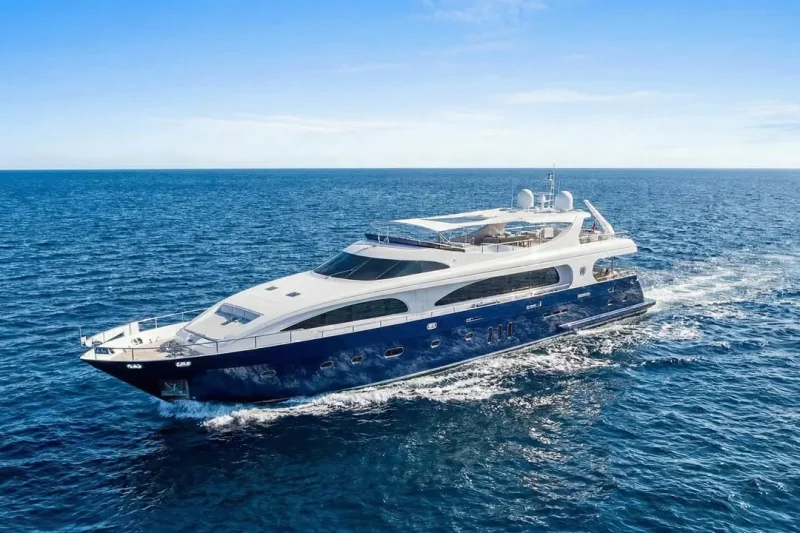
Once you cross 80 feet, everything changes. Full crew, real staterooms, a chef in the galley, and a swim platform the size of a small patio. Rates start around $2,700 an hour and climb to $8,000 on the biggest event vessels. Here's what each tier gives you, how many guests it can legally carry, and where the money actually goes.
Key Takeaways
Entry-level mega yachts start near $2,700 an hour with full crew included.
Cruising capacity and dockside capacity are two different numbers on most vessels.
A non-inspected yacht caps at 12 guests plus crew, whatever its length.
Crew count drives the rate more than length does.
Book three to six months ahead for large events. Inventory at this size is thin.
Superyacht vs Mega Yacht: Settling the Definition
The short version: there's no regulated line between them. Both terms are industry conventions rather than legal categories, which is why different operators draw the boundary in different places.
The common usage puts superyacht at roughly 80 feet and above, and mega yacht at around 130 feet and above. Some people use the two interchangeably for anything over 100 feet. Neither is wrong.
What matters for your booking is not the label. It's the vessel's certification, its certified passenger count, and its crew. Ask about those three and the naming question stops mattering entirely.
What a Mega Yacht Charter Costs
Vessel | Length | Guests | Rate |
|---|---|---|---|
88 ft Ferretti Custom Line | 88 ft | 12 | $2,700 / hr |
98 ft Princess | 98 ft | 49 | $3,000 / hr |
120 ft inspected passenger vessel | 120 ft | 150 | $5,000 / hr |
130 ft mega yacht | 130 ft | 100 | $7,500 / hr |
150 ft event vessel | 150 ft | 375 | $8,000 / hr |
Broadly, mega yachts run $750 to $1,625 an hour at the lower end. Larger inspected passenger vessels built for 100 or more guests run $1,500 to $3,000 an hour, and the named vessels above sit at the premium end of that.
Notice that rate doesn't track length neatly. The 130 ft costs more per hour than the 150 ft, because crew, build quality, and demand all feed into the number alongside size.
The Length Tiers
80 to 100 ft: Entry-Level Mega Yachts
This is where most first-time mega yacht clients land, and it delivers the experience without the very top rate. Expect full crew, three or four staterooms, four heads, and a flybridge with proper seating.
The 88 ft Ferretti Custom Line at $2,700 an hour carries 12 guests. The 98 ft Princess at $3,000 carries 49 under its certification. That gap between two similar lengths is the clearest example of why certification matters more than size.
100 to 130 ft: Full Crew and Overnights
Crew grows again here, and overnight charters become genuinely comfortable rather than just possible. Tender and toy garages appear, so the boat carries its own jet skis and Seabobs rather than having them delivered.
Fuel burn rises steeply at this size, which matters on any route longer than a bay loop. A 120 ft inspected passenger vessel at $5,000 an hour carries 150 guests, which is where the per-person math starts working again.
130 ft and Up: The Top of the Market
A small number of vessels, booked well ahead. The 130 ft at $7,500 an hour carries 100 guests, and the 150 ft event vessel at $8,000 carries 375.
At this level a flat event fee often replaces straight hourly pricing, and the conversation moves toward venue planning rather than boat hire. Availability is the real constraint rather than budget, so start early.
How Many Guests Can Come
This is the rule that surprises people most, and it has nothing to do with deck space. Coast Guard rules under Subchapter T cap paying passengers on uninspected vessels at 12 guests plus crew, regardless of length. That's why an 88 ft vessel carries 12.
Inspected passenger vessels are certified to carry far more, starting around 49 and running to 150 or beyond. So ask every operator the same question: is this vessel inspected, and for how many passengers. Everything else follows from the answer.
Cruising Capacity vs. Dockside Capacity
Two numbers, and they're often different. Cruising capacity is how many people the vessel can carry while under way, set by its certification. Dockside capacity is how many it can host while tied up.
A vessel at the dock isn't carrying passengers at sea, so the limit shifts. That's how a boat certified for a modest cruising number can host a much larger reception alongside. Marina rules and any event permitting come into play instead.
Confirm both figures before you build a guest list. A hybrid event, docked for arrival then cruising with a smaller group, is a real option on some vessels and needs both numbers to plan properly.
Dockside Events: Hosting 100 Guests
For 100 guests and up, the docked model is usually the answer. Catering scales properly with shore access, AV works without wind fighting your speakers, and guests can arrive and leave across the evening rather than all at one departure time.
Pricing shifts toward a flat event fee at this point, and the marina becomes part of the booking. Raise permitting early, since it's the piece most likely to affect your date. Our guide to boats for 30 to 50 guests covers the crossover from cruising to dockside in more detail.
Who's on the Crew
Crew is the biggest single driver of the rate at this size, and knowing the roles helps you read a quote. Every captain aboard holds Coast Guard credentialing, so the ranks below track experience rather than legal minimums.
Captain. USCG licensed, runs the vessel and makes every safety call.
First mate or deckhand. Handles lines, the tender, the swim platform and the water toys.
Engineer. Keeps generators, air conditioning and systems running across a long charter.
Chef. Cooks aboard, which needs a galley built for it.
Stewardess. Looks after guests, cabins and service throughout the day.
Event coordinator or additional crew. Added for larger functions and multi-boat days.
Crew-to-guest ratio does more for how the day feels than any single feature of the boat. Two vessels of the same length with different crew counts are different products.
What's Included at This Size
The base rate covers the captain, full crew, fuel, dock fees at the home marina, safety gear, ice, water, and basic table service. That last item is worth noting, since it doesn't appear on smaller charters.
Catering, alcohol, and decor sit outside the rate. So do powered water toys on many vessels, and dockage if you stop somewhere else. Our guide on what's included puts a figure against every line.
Mega Yacht Add-Ons and VIP Upgrades
This is the tier where the extras genuinely change the day rather than just the invoice.
Private chef service and bespoke menus, from $500 to $1,500 depending on guests and menu.
Premium bar service and rare vintage selections.
Water toy packages. Seabobs, jet skis, flyboards and inflatables, roughly $50 to $200 an hour per item.
Onboard entertainment. Live DJ, sound reinforcement, screens and projectors.
Photography and drone coverage of the day.
Decor and floral styling for events and celebrations.
Luxury ground transport to and from the marina.
Ask which of these the vessel can support before you book rather than after. A chef needs a real galley, and a DJ setup needs power and deck space, so not every boat handles every upgrade.
Staterooms and Overnight Charters
Day capacity and sleeping capacity are different numbers, and the gap is wide. A vessel that hosts 49 for an afternoon might sleep ten across four or five staterooms.
Overnight adds provisioning, crew service across meals, and dockage at any stop. A Bimini day trip starts around $5,000 and runs ten to twelve hours, and multi-day trips to the Bahamas price differently again. Our Bahamas route guide covers the planning side.
Where a Mega Yacht Can Go
Draft is the constraint nobody mentions. A big hull sits deep, so the shallowest sandbars are off limits and the boat anchors further out with a tender running guests across.
What you gain is range and comfort offshore. Crossings that would be uncomfortable on a 60 ft are easy at this size, which opens up the Keys and the Bahamas as real day options rather than ambitious ones.
Mega Yacht Departure Points in Miami
Larger vessels need deep water, floating docks, and room to maneuver, so they berth in fewer places than smaller boats. Island Gardens and Miami Beach Marina both handle vessels at this scale, and Harbor Island Marina in North Bay Village berths larger yachts too.
Departure point affects your day in two ways. It sets the drive for your guests, and it decides how much cruising time goes on reaching the good water. Confirm the exact marina before you pay, and check parking and drop-off access if you're expecting 40 arrivals at once.
One Mega Yacht or Two Smaller Boats?
35 guests, 4 hours | One 98 ft | Two 60 ft |
|---|---|---|
Rate | $3,000 / hr | $250 / hr each |
4-hour total | $12,000 | $2,000 |
Heads | 4 plus | 4 across both |
Crew | Full crew | Two captains, two mates |
Per person | $343 | $57 |
Feels like | One event, one room | Two boats, two parties |
On price alone it's not close. Two mid-size boats win comfortably up to about 30 guests, and our guide to boats for 30 to 50 guests runs those numbers properly.
The mega yacht wins when the event needs one room. A seated dinner, a speech, a product reveal, or a ceremony can't be split across two hulls. It also wins on service, since a full crew does things a captain and a mate simply can't.
Booking Lead Time
Inventory is thin at this size, so lead times run longer than for a normal charter. Six to twelve weeks covers a standard date. Three to six months is right for multi-boat events and product launches, and major weeks need six to nine months.
Deposits are higher and contract review takes longer at this level too. Peak season runs December through April, and the best vessels are spoken for well before it starts.
Frequently Asked Questions
How much does it cost to charter a mega yacht?
Expect $2,700 to $8,000 an hour on named vessels, with the broader market running $750 to $3,000. An 88 ft Ferretti sits at $2,700 and a 150 ft event vessel at $8,000. Captain, full crew, fuel, and dock fees are included in those figures.
What is the difference between a superyacht and a mega yacht?
Convention rather than regulation. Superyacht generally means roughly 80 feet and above, and mega yacht around 130 feet and above, though usage varies by operator. Neither term is legally defined. What matters for booking is the vessel's certification and certified passenger count.
How many guests can a mega yacht hold?
Twelve plus crew on a non-inspected vessel, regardless of length. Inspected passenger vessels carry far more, from 49 up to 375 on the largest event boats. Dockside capacity is often higher than cruising capacity, so confirm both numbers for your vessel.
How much crew does a mega yacht need?
A captain, first mate, engineer, chef, and stewardess is a typical core team, with additional crew or an event coordinator added for larger functions. Crew count scales with guests and service level rather than length alone, and it's the biggest driver of the hourly rate.
Can a mega yacht reach the sandbars?
Not the shallowest ones. Draft keeps larger hulls further out, so the boat anchors in deeper water and a tender runs guests to the sandbar. That works well and adds a little time. Smaller yachts can tuck in closer if the sandbar is the main event.
How far ahead should I book?
Six to twelve weeks for a standard date, three to six months for multi-boat events, and six to nine months for major weeks. Peak season runs December through April. Larger deposits and longer contract review both add time, so start earlier than feels necessary.
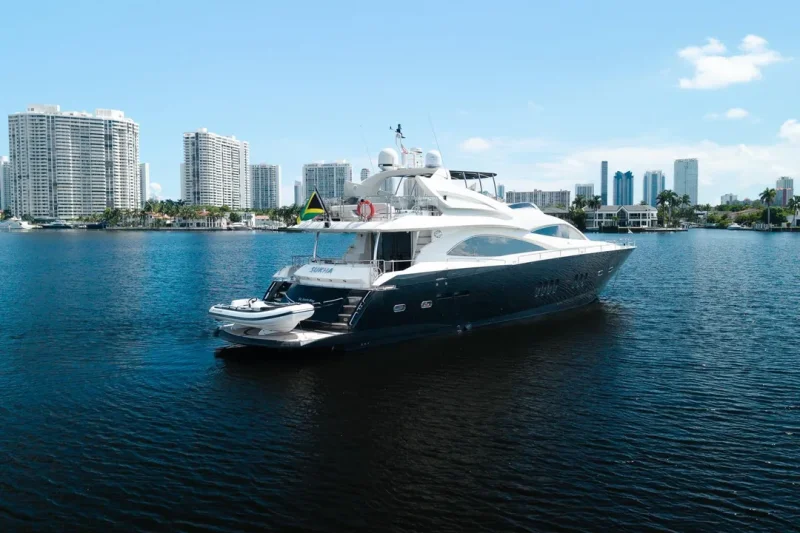
Get a Mega Yacht Quote
A day on a boat this size is a genuinely different experience, and the crew is most of the reason why. Send your date, guest count, and whether you want to cruise or stay dockside through our mega yacht fleet page, or contact us directly, and we'll come back with the vessels certified for your group.