

Miami to Bahamas Yacht Charter Routes & Itineraries
Mariam Revuelta
Miami to Bahamas Yacht Charter: Routes & Itineraries
"Forward, upward, onward together," as the Bahamian national motto says, and from Miami, the most fitting way to take that literally is by yacht.
The Gulf Stream puts Bimini, the nearest Bahamian island, roughly 50 to 55 nautical miles from South Florida, reachable in as little as 2.5 to 3 hours on a fast motor yacht. Cross it and the water changes color, the pace changes completely, and the Florida coastline disappears behind you in a way that no airport departure ever quite replicates.
A Miami to Bahamas yacht charter can be a two-day escape to Bimini, a five-day Berry Islands circuit, or a ten-day Exumas passage. What shapes your route is your schedule, your vessel, and which version of the Bahamas you are after.
Let’s work through the main options so you can match the right itinerary to your trip.
How Long Does It Take a Yacht to Go From Miami to the Bahamas?
Crossing time varies significantly depending on your destination and vessel, and all times below assume calm to moderate conditions at typical cruising speed.
How Long Is a Boat Ride From Miami to the Bahamas?
Your crossing time by destination:
To Bimini, you are looking at approximately 2.5 to 3 hours on a fast motor yacht, or 4 to 5 hours on a cruiser or sailboat
To Nassau, expect a full cruising day of 8 to 10 hours depending on your vessel
To the Exumas, plan for a multi-day passage with Nassau typically serving as a midpoint stop
How Long Does It Take to Get to the Bahamas From Miami by Boat?
The Gulf Stream crossing itself takes 2 to 3 hours in good conditions. Your total travel time to your first Bahamian anchorage depends on which island you are heading for and how much the current and wind affect your course. Factor in customs clearance on arrival, which adds 30 to 60 minutes before you are free to explore. An early morning start consistently gives you better sea conditions and more usable daylight on the other side.
What Is the Best 4–5 Day Miami to Bahamas Yacht Itinerary?
For a shorter charter, the route through Bimini and the Berry Islands is the most efficient way to experience genuine Bahamian cruising without overextending your schedule.
Day 1: Miami to Bimini
Depart early to take advantage of calmer Gulf Stream conditions. After you clear customs in Alice Town on North Bimini, your afternoon opens up for snorkeling at the S.S. Sapona wreck, a visit to Honeymoon Harbor, or simply settling into the marina and exploring the waterfront.
Day 2: Bimini to Chub Cay
The passage across the Great Bahama Bank is one of the more visually striking legs of any Bahamian charter. The water turns shallow and clear, often running 8 to 15 feet over white sand for hours at a stretch. Chub Cay at the southern end of the Berry Islands offers a well-equipped marina and a calm overnight anchorage.
Day 3: White Cay and the Berry Islands
The Berry Islands are uncrowded and largely undeveloped. White Cay and the surrounding blue holes offer excellent snorkeling in calm, protected water. Anchor out, put the swimming platform down, and spend the day at a pace you have probably forgotten is possible.
Day 4: Great Harbour Cay
Great Harbour Cay has one of the best beaches in the northern Bahamas, a long stretch of soft sand with almost no development behind it. A half day here followed by a relaxed afternoon cruise positions you well for the return leg.
Day 5: Return Toward Florida
Departing from the Berry Islands, your return crossing is typically smoother heading west. You are back in Florida by early afternoon, which works well if you have evening flights or other commitments.
What Is the Best 7–8 Day Exumas Yacht Itinerary?
The Exumas is the destination most experienced Bahamas charterers return to. Protected anchorages, the Exuma Cays Land and Sea Park, and a chain of islands stretching over 100 miles make it the signature multi-day route from South Florida.
Day 1: Miami to Nassau
The crossing to Nassau takes a full cruising day. Nassau's harbor offers a wide range of dining, provisioning, and overnight docking options, and it serves as a useful resupply stop before you head into more remote island territory.
Day 2: Nassau to Allan's Cay
Allan's Cay marks the northern entrance to the Exuma chain and is home to native Bahamian iguanas that greet arriving yachts from the shoreline. The water here is clear and your anchorage will be well-protected.
Day 3: Highbourne Cay to Shroud Cay
Highbourne Cay has marina facilities and a small market, useful for any last provisioning before you head deeper into the chain. Shroud Cay, just south, sits within the Exuma Cays Land and Sea Park and offers mangrove creeks and tidal pools that reward an afternoon of exploration by dinghy.
Day 4: Warderick Wells
Warderick Wells is the headquarters of the Exuma Cays Land and Sea Park and one of the most visually striking anchorages in the entire Bahamas chain. Mooring balls are required within the park. Hiking trails cross the cay and the snorkeling in the surrounding water is exceptional.
Day 5: Staniel Cay and Big Major Cay
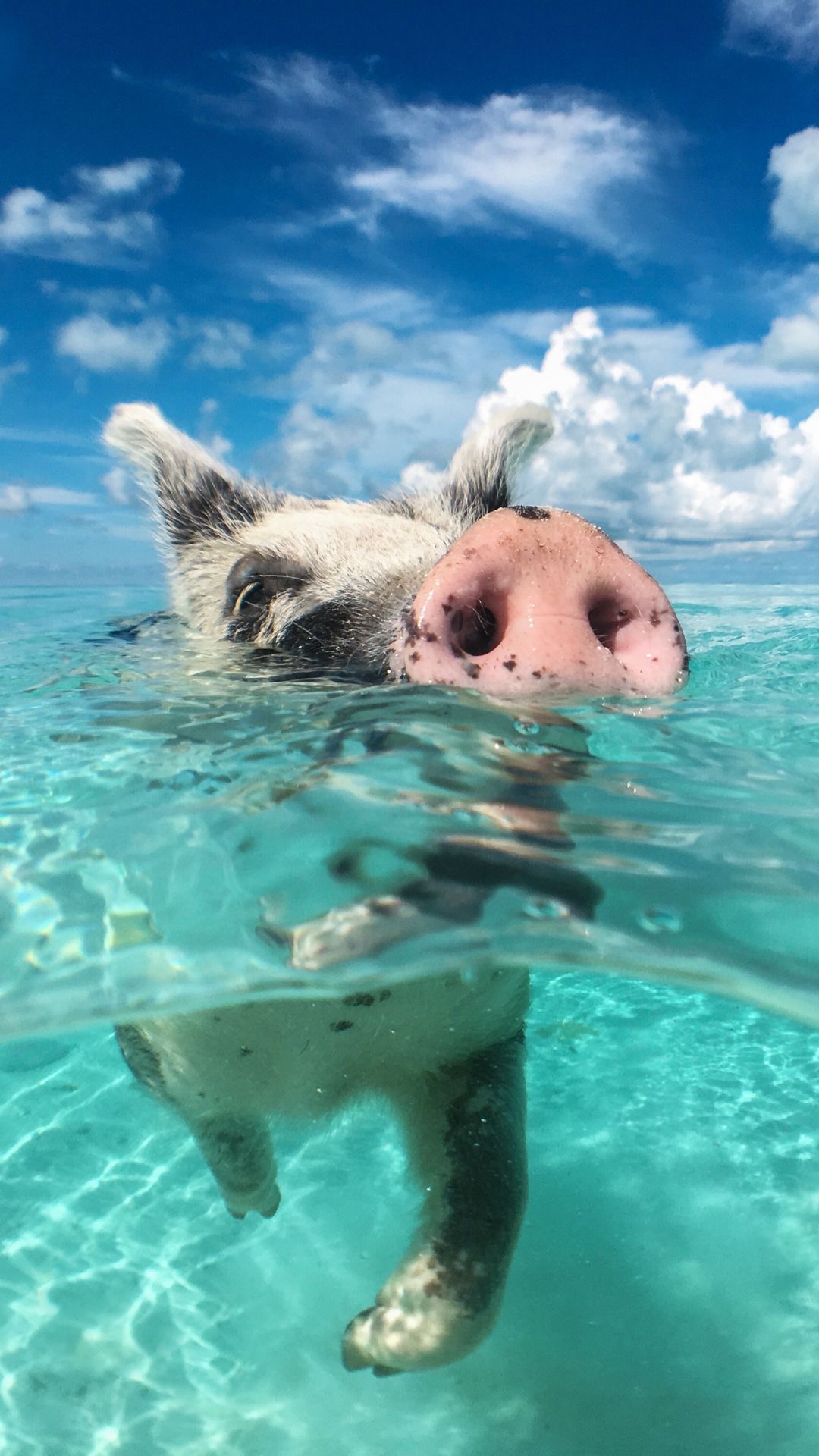
Staniel Cay has Thunderball Grotto, a sea cave used as a filming location in multiple James Bond films and accessible by snorkel at low tide. Just across the water at Big Major Cay, you will find the famous swimming pigs. Both stops in a single day is a full but very manageable itinerary.
Days 6–7: Norman's Cay
Norman's Cay makes a natural final destination before you turn back toward Nassau and the crossing home. A sunken aircraft sits in shallow water and is visible from the surface. The beaches and anchorages here are among the quietest in the chain.
What Is the Best Northern Bahamas Yacht Route?
The Abacos offer a different experience from the Exumas, with more colonial character, better-protected waters for sailing, and a string of distinct island settlements spread across a compact cruising ground.
Day 1: Miami to Freeport
Freeport on Grand Bahama Island is a straightforward crossing from South Florida and a convenient first-night stop with full marina facilities.
Day 2: Treasure Cay
Treasure Cay has a well-regarded marina and one of the most photogenic beaches in the Bahamas, a three-mile arc of sand that consistently earns its reputation.
Day 3: Green Turtle Cay
New Plymouth on Green Turtle Cay is one of the most well-preserved colonial settlements in the Bahamas, with pastel-painted buildings, a working harbor, and a pace of life that has not changed much in decades.
Day 4: Man O' War Cay
Man O' War Cay is known for traditional Bahamian boatbuilding and a calm, protected harbor that makes for an excellent overnight anchorage.
Day 5: Hope Town
Hope Town's candy-striped lighthouse is the most photographed image in the Abacos. The harbor village is small and walkable, with good restaurants and a relaxed waterfront that is easy to spend an afternoon in.
Days 6–7: Little Harbour and Return
Little Harbour has a working bronze foundry and one of the more unusual waterfront bars in the Bahamas. From here, your return route heads back north through the chain toward Freeport and the Florida crossing.
How Much Does It Cost to Charter a Yacht to the Bahamas?
What you pay depends on your vessel size, trip length, and what is included. Here is a general planning framework to work from:
Small to mid-size motor yachts on a 4 to 5 day charter run approximately $8,000 to $20,000 before additional expenses
Larger or luxury yachts on a 7 to 10 day charter run $25,000 to $80,000 or more
Fuel adds $1,000 to $5,000 or more depending on your vessel size and route distance
Marina dockage across most Bahamian marinas runs $2 to $5 per foot per night
Your Bahamas cruising permit costs approximately $150 to $300 depending on vessel size
Provisioning typically runs $500 to $2,000 for a week depending on your group size
Split across a group of ten, a $15,000 five-day charter works out to $1,500 per person for an international island-hopping trip with a private crew and a fully flexible itinerary.
Are There Hidden Fees in Yacht Charters?
Common additional costs include fuel surcharges, crew gratuity of 15 to 20 percent, dockage, provisioning, and any water toy or tender rentals not included in your base rate. Always ask for a full cost breakdown in writing before you confirm a booking.
Do You Need a Passport if You Take a Boat to the Bahamas?
Yes. Every passenger on a private vessel entering the Bahamas needs a valid passport book. A U.S. passport card may be accepted by some Bahamian immigration officials for sea entry, but enforcement varies and a passport book is the most reliable option. Arriving without one puts you at risk of being denied entry.
On your return to the U.S., you are required to report your arrival to U.S. Customs and Border Protection via the CBP ROAM app or at a designated reporting facility. Confirm the reporting process and facility hours with your charter operator before you depart. Check the Bahamian Department of Immigration and the U.S. State Department for the latest entry requirements before your trip.
What Is the Best Boat to Go to the Bahamas?
Your ideal vessel depends on your route, group size, and preferred pace.
Motor Yachts
Motor yachts are the most popular choice for a Miami to Bahamas yacht charter. They cover the Gulf Stream crossing quickly, offer comfortable onboard amenities, and handle most Bahamian anchorages without difficulty. Fuel consumption is higher, but the time savings matter when your priority is time on the islands rather than time in transit.
Catamarans
Catamarans offer exceptional stability in open-water conditions, which makes the Gulf Stream crossing more comfortable if anyone in your group is prone to motion sickness. The shallow draft is a significant advantage in the Bahamas, where sandbars and reef edges require careful navigation. They also give you more living space relative to their length, which makes a real difference on longer itineraries.
Sailing Yachts
A sailing yacht changes the character of your trip entirely. Passages take longer, but crossing the Gulf Stream under sail is a genuinely different experience from a motor passage. Sailing yachts suit guests who want the journey to feel as much a part of the trip as the destination and who have the time to let the itinerary breathe.
What Should You Know Before Crossing the Gulf Stream?
The Gulf Stream flows northeast between Florida and the Bahamas. On calm days with favorable winds, you will barely notice it. When northeast winds blow against the current's flow, it creates short, steep waves that are uncomfortable on most vessels and genuinely rough on smaller ones.
Before your crossing, check these specifically:
Gulf Stream current forecasts and real-time charts, not just the general sea state
Wind direction, since northeast winds are the most problematic and southeast winds tend to flatten conditions
Sea state forecasts for your specific crossing window, not just the general day
Your seasickness plan, because the Gulf Stream produces more motion than most Florida coastal trips
Morning departures give you calmer conditions before the afternoon sea breeze builds. If your captain recommends waiting a day for a better weather window, take that advice. A one-day delay almost always produces a better crossing.
What Is the Best Time to Visit the Bahamas by Yacht?
Peak charter season runs from December through April. Trade winds are reliable, weather is generally stable, and your crossing and anchorage conditions are at their most predictable. The tradeoff is that popular spots like Staniel Cay and Warderick Wells are at their busiest during this window.
Spring, particularly March through May, balances good weather with slightly lower crowd levels and is widely considered the most pleasant time for a relaxed Bahamas passage. Summer gives you warmer water and less boat traffic but also more variable weather and afternoon thunderstorms. Hurricane season runs from June through November, with August through October carrying the highest risk. Most charter operators and experienced cruisers avoid multi-day offshore itineraries during this period.
Ready to Plan Your Miami to Bahamas Yacht Escape?
The right route depends on how much time you have and what you want to feel when you are out there. Bimini works for a quick international escape. The Berry Islands suit a compact five-day adventure. The Exumas are the standard-setter for a full Bahamas passage. The Abacos reward a slower pace and a genuine interest in the islands themselves.
Pick your route, confirm your weather window, and get your passports ready.
Browse available boats and yacht charters on Book My Boat and find the right vessel for your Bahamas itinerary.