

Best Yachts for Client Entertainment in Miami (2026)
Mariledy Guerra Quintana
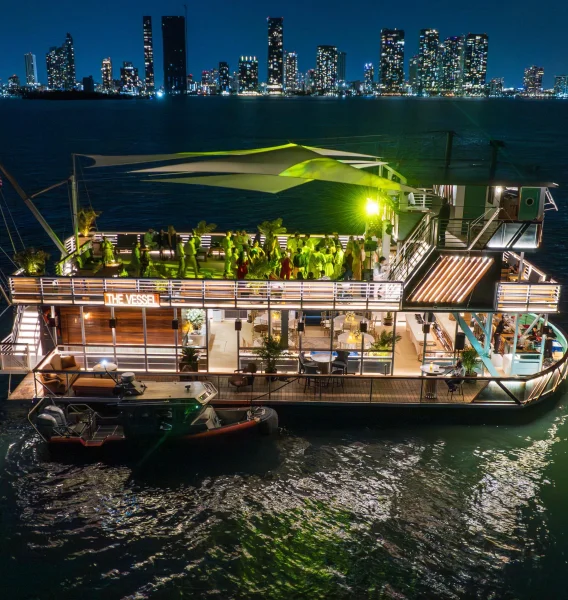
A dinner in a conference room or a crowded steakhouse rarely changes how a client feels about working with you. An afternoon on the water often does, because the setting is private, the time is uninterrupted, and the invitation itself tells the client they are worth the effort.
Where hosts tend to go wrong is choosing a boat that does not fit the occasion. A yacht that feels perfect for a sunset reception can be too loud for a pitch meeting, and a small cruiser that works for a quiet dinner will feel cramped with 40 guests. The best yachts for client entertainment in Miami are the ones matched to what the day is for, and headcount is only part of that.
In this article, we walk through why client entertainment works so well on a yacht, how to pick a vessel for four common business use cases, what to ask about AV and catering, and how to handle the corporate paperwork before you book.
Why Does Client Entertainment Work Better on the Water?
Client entertainment tends to work better on a yacht because you control the whole environment. There are no other diners at the next table, no server interrupting mid-sentence, and no one checking their phone to see if the car is outside yet.
That control changes the conversation. Once the boat leaves the dock, your guests have set aside two to four hours for you, and they usually settle into it. People open up more when they are relaxed, and relaxed people remember the afternoon long after they have forgotten a meal.
A charter also signals investment in the relationship. Inviting a client onto a private yacht says you planned something around them, which carries weight when you are trying to renew a contract, thank a long-standing account, or introduce a new partner to your leadership team.
That said, the setting only helps if the vessel fits the purpose, so the next step is matching the boat to the day.
How Do You Choose a Yacht by Business Use Case?
Picking from the best yachts for client entertainment starts with the purpose of the day. From there, you can check capacity, layout, and onboard services against that goal. A dinner meant to close a deal needs different things than a reception meant to thank 60 clients at once.
Here are the four use cases we see most often on corporate charters, along with the vessel features that tend to serve each one best.
Executive Dinners and Small Pitch Meetings
For a dinner with four to twelve guests, a smaller, more intimate yacht usually works best. Look for a vessel with a private dining salon, a galley that can handle plated service, and a quiet engine room, since ambient noise can make it hard to follow a conversation or talk through a proposal.
A boat in the 50 to 70 foot range often hits this balance, with enough space for a seated meal and a covered aft deck for drinks afterward. If you plan to share printed materials or a tablet presentation at the table, ask whether the salon has good interior lighting after sunset.
Large Client Receptions
A client appreciation event with 40 or more guests calls for a larger vessel with open deck flow, bar service capacity, and a comfortable buffer below the maximum guest count. Guests at a reception move around, gather in small groups, and linger near the bar, so a boat rated for 50 can feel crowded with 45.
Many hosts in this range look at our mega yacht charters, which typically offer multiple decks, an indoor salon for cooler evenings, and room for a DJ or live musician without crowding the bar. If your guest list is still moving, our guide on what size yacht you need by guest count can help you check the numbers.
Discreet One-on-One or Small-Group Meetings
When the conversation is sensitive, such as a merger discussion or a partnership negotiation, look for a vessel with a private cabin or an enclosed salon that can be closed off from the deck. You will also want to ask how visible the crew needs to be during the meeting portion, since service can often be scheduled around your agenda.
Flexible timing helps here too. These meetings can run long when things go well and short when they do not, so a charter with an easy overtime policy gives you room to let the conversation find its own pace.
Day-Cruise Pitches and Demos
A day cruise built around a pitch or a product demo needs reliable power, covered seating, and a realistic schedule. Before you commit to a boat, confirm that its generator can support a screen, a laptop, and any demo equipment at the same time, and ask where guests can sit if a passing shower rolls in.
Build travel time into the plan, too. A cruise to a scenic anchorage and back can take 30 to 45 minutes each way, and that time comes out of your presentation window if you do not account for it.
Tell us the deal size and the guest list, and we will help match the yacht to the occasion. Once you have a shortlist, the next step is checking the details that make or break a business event.
What Should You Ask About AV, Catering, and Space Before Booking?
Before booking a yacht for a client event, ask specific questions about power, connectivity, food service, and seating. These details vary widely from one vessel to the next, and a listing photo will not tell you whether the salon can host a presentation.
Here are the questions worth putting to the charter team in writing:
How much power can the generator supply, and are there outlets near the seating area?
Is Wi-Fi available onboard, and how reliable is it once the boat is underway?
Can the catering menu be set up for a business dinner with plated courses?
Is there an enclosed space with boardroom-style seating if you need privacy?
How many crew members will be onboard, and where will they be during the meeting?
What happens to the schedule if weather forces a change of plans?
Written answers help you compare two or three vessels on equal terms. They also give your event lead something concrete to plan around, which lowers the odds of a surprise on the day.
With the vessel and services settled, the last thing standing between you and a confirmed date is usually paperwork.
How Do You Handle the Corporate Booking Paperwork?
Corporate bookings often require a Certificate of Insurance (COI), a W-9 for your accounts payable team, and sometimes Net 30 payment terms. A COI is a document that shows the charter operator carries liability insurance, and many companies will not approve a vendor without one on file.
These steps can take longer than hosts expect, especially at larger companies where finance, legal, and procurement all need to sign off. Starting the paperwork as soon as you pick a date gives each department time to review without rushing the booking.
Our guide to corporate yacht charter paperwork covers each document in detail, including what to request and when. With the paperwork in motion, you can focus on the guest experience itself.
How Far in Advance Should You Plan a Client Charter?
Plan a client charter at least four to six weeks ahead, and closer to eight weeks if the date falls in peak season or around a major event. Winter weekends and big-event weeks tend to book early, and larger yachts have fewer options to choose from.
That lead time also helps your guests. Executives often have full calendars, and an invitation that arrives a month or more ahead gives them a better chance of saying yes.
Frequently Asked Questions
What size yacht is best for a corporate client dinner?
A yacht in the 50 to 70 foot range usually works well for a client dinner with four to twelve guests. It offers a private salon for a seated meal and a quieter setting for conversation, while a larger vessel can feel empty and less personal with a small group.
Can I run a presentation or demo on a yacht?
Yes, in many cases you can run a presentation or demo on a yacht. Confirm the generator's power capacity, outlet locations, and Wi-Fi reliability ahead of time, and choose a covered space for the screen so glare and weather do not interfere.
Do corporate yacht charters require special paperwork?
Many corporate charters require a Certificate of Insurance, a W-9, and sometimes Net 30 payment terms. Requirements depend on your company's vendor policies. Our paperwork guide explains each document and how to request it.
How far in advance should I book a yacht for a client event?
Aim to book four to six weeks ahead for most client events, and about eight weeks ahead for peak-season weekends or larger yachts. That window leaves time for corporate approvals and gives your guests enough notice to plan around the date.
Can we hold a confidential client meeting on a yacht?
An enclosed salon or private cabin may offer more privacy than a restaurant, though it depends on the vessel. Ask about crew access, noise, and connectivity during the meeting, and confirm those arrangements in writing before you book.
Ready to Match the Yacht to Your Client Event?
Share the occasion, the guest list, and what you hope the day accomplishes, and the Book My Boat team will shortlist the yachts for client entertainment that fit your plans. You can start with our corporate charter options or reach out directly to talk through dates.